Reliquary of the Pietà
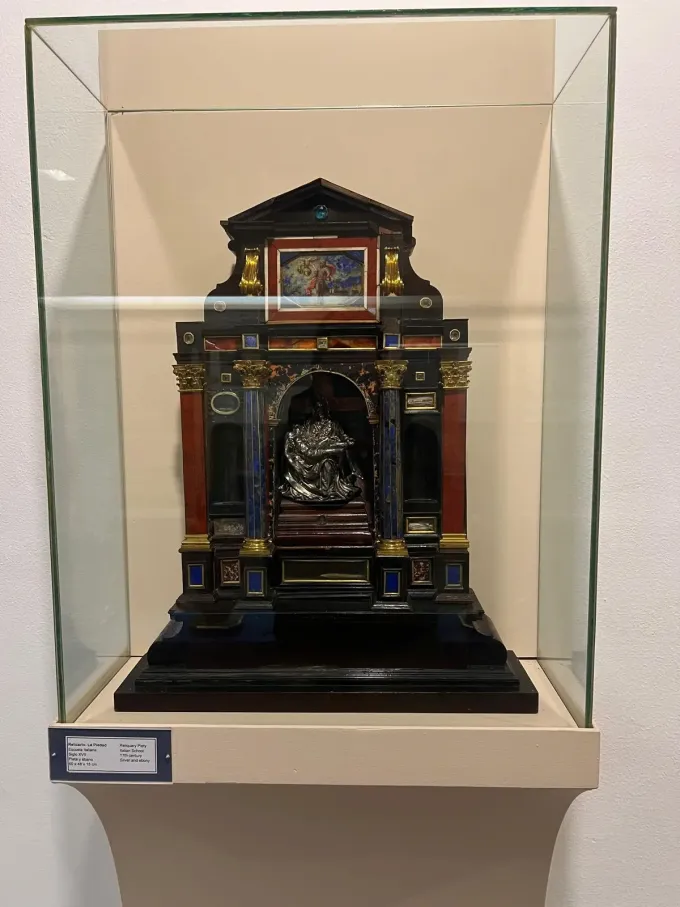
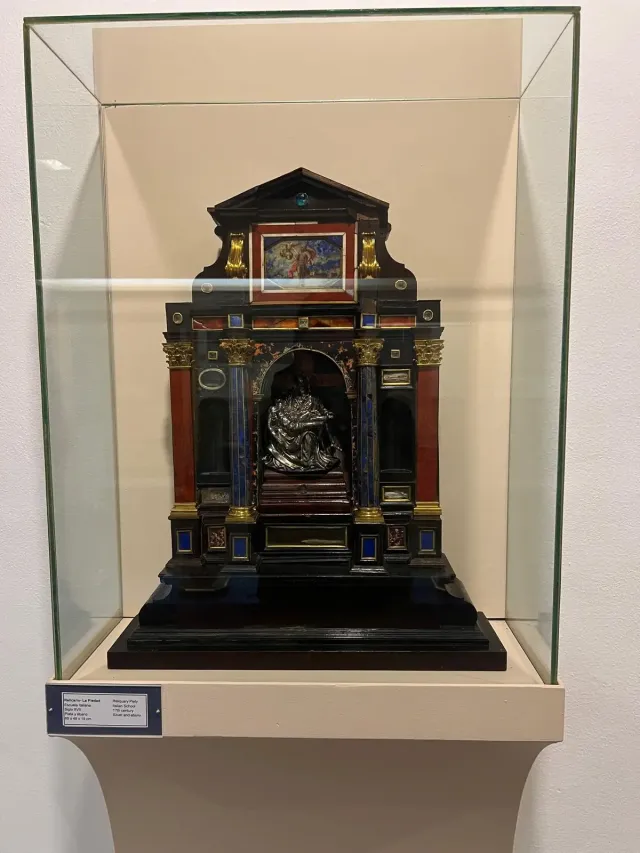
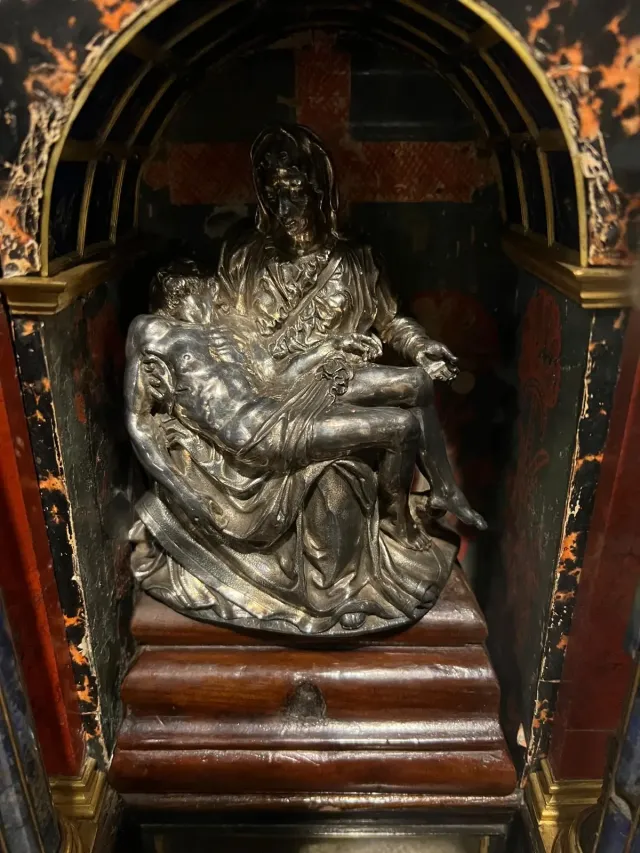
This piece is a small reliquary altarpiece containing a silver reproduction on a small scale of Michelangelo Buonarroti's Pietà. The small altarpiece presents an architectural scheme with a central body divided into three sections. It is a piece made with a wooden core and covered with ebony plates, various hard stones, and gemstones.
On the predella, there are three plates on each side, in alternating colours, determined by the chromatic nature of the materials themselves: lapis lazuli and jasper. In the central part, a small elongated niche holds one of the relics treasured by the structure.
In the central body, the niche with the image of the Pietà with Christ in her arms presides over the ensemble. This is flanked by two columns of strong architectural presence that divide the sections. Both feature identical bases and Corinthian capitals in over-gilded bronze. The shafts would be made from set lapis lazuli stones. In the lateral sections, there are two small empty niches, and at their ends (upper and lower), two small niches with relics on both sides of the reliquary. Finally, the lateral boundaries are defined by two pilasters composed of two jasper plates each and, like the columns, with bases and Corinthian capitals in over-gilded bronze. In the transition space toward the upper body, there are various pieces of jasper, lapis lazuli, and gemstones.
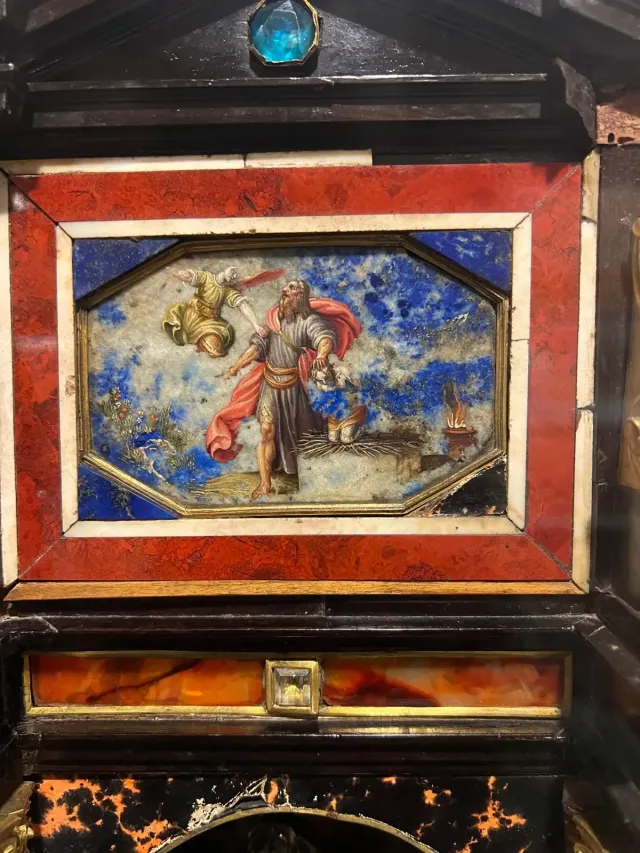
In the attic, a curious oil painting on lapis lazuli presides, representing the scene of the Sacrifice of Isaac. The image shows Isaac on the altar and Abraham in the act of offering his son as a holocaust. Everything occurs at the precise moment when he is stopped by the angel before committing filicide. The scene reflects the great test of faith to which Abraham was subjected (Gen 22:1-12). Furthermore, the ensemble is crowned by a pediment decorated with a small blue stone in the center.
Finally, as noted by Chamoso Lamas and M. Casamar, there seems to be no direct correspondence between the pedestal that supports the image of the Pietà and the central niche (cf. Chamoso Lamas y Casamar, 1980: 100).
-
Andrés González, P. (2020). “De convento a museo. Las colecciones de patronazgo femenino entre las clarisas”, en Ángel Zalama, M. e Andrés González, P. (eds.), Ellas siempre han estado ahí. Coleccionismo y mujeres. Madrid: Ediciones Doce Calles, pp. 95-111.
-
Chamoso Lamas, M. y Casamar, M. (1980). Museo de Arte Sacro Clarisas de Monforte de Lemos. Madrid: Caja de Ahorros de Galicia.
-
Lorenzana Lamelo, M.ª L. (1986) Aportación documental al estudio histórico-artístico de dos fundaciones monfortinas: el colegio de la Compañía y el Convento de las Clarisas. Santiago de Compostela: Universidad de Santiago de Compostela.
-
Sáez González, M. (2018). Coleccionismo y almoneda del gran Conde de Lemos, Don Pedro Fernández de Castro. Lugo: Diputación de Lugo.