Recumbent Christ
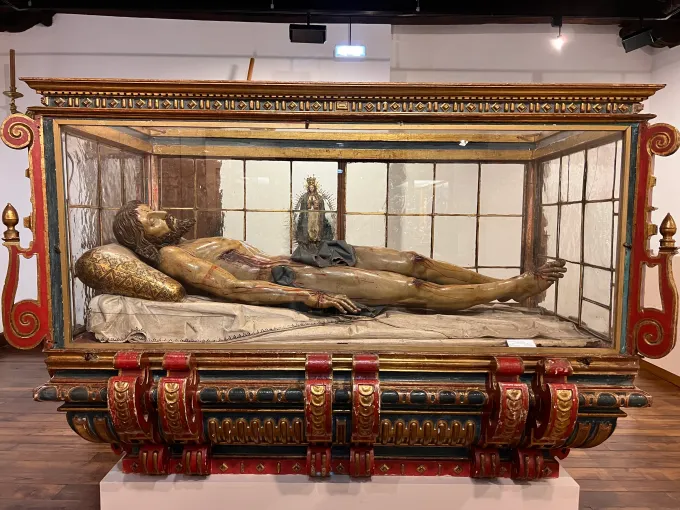
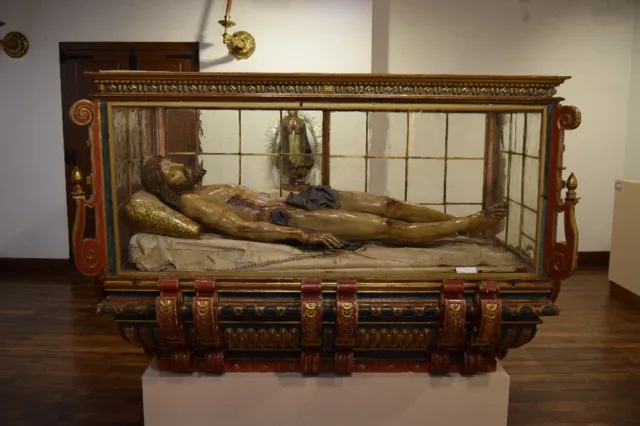
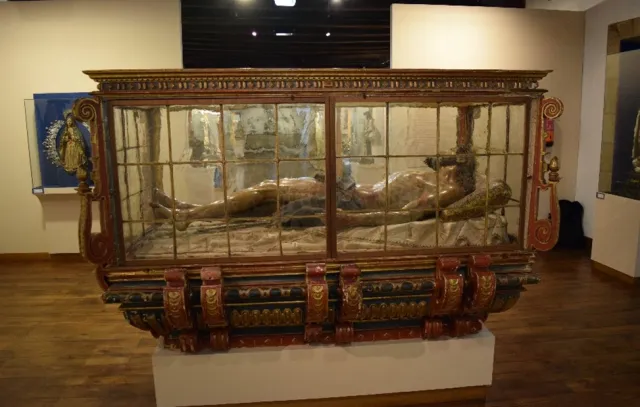
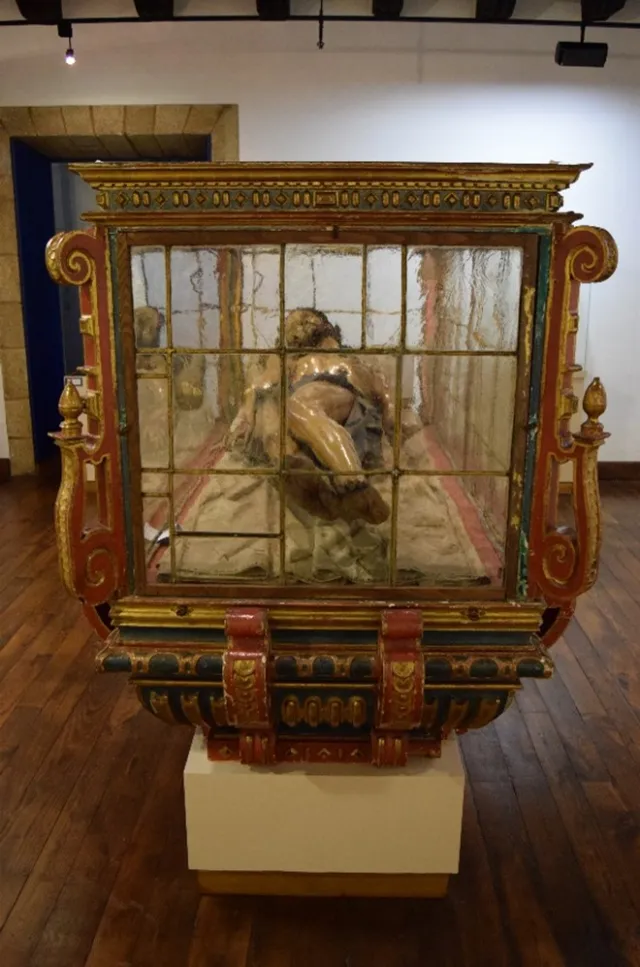
This sculptural image represents Christ in a recumbent position, immediately after the Crucifixion. It was executed in polychrome wood and the work stands out for its realism and meticulous detail which is the result of a careful anatomical study and a refined sculptural technique. The body, carved as an independent piece, is conceived to be contemplated from all angles, allowing one to appreciate the complexity and expressiveness of the figure.
Gregorio Fernández uses various resources to accentuate the naturalism of the work: glass eyes, ivory teeth, artificial nails, a loincloth made of glued fabric, as well as resins and cork to represent the wounds. These elements contribute to achieving a striking and moving representation of Christ's body, exhausted by suffering, with an emaciated face and the head inclined to the right.
The polychromy reinforces the verisimilitude of the anatomy, allowing one to distinguish musculature, bone structure, and even veins. Special attention is owed to the face, where the artist manages to immortalize the serenity of Christ before his terrible suffering, conveying an intense emotional and spiritual charge.
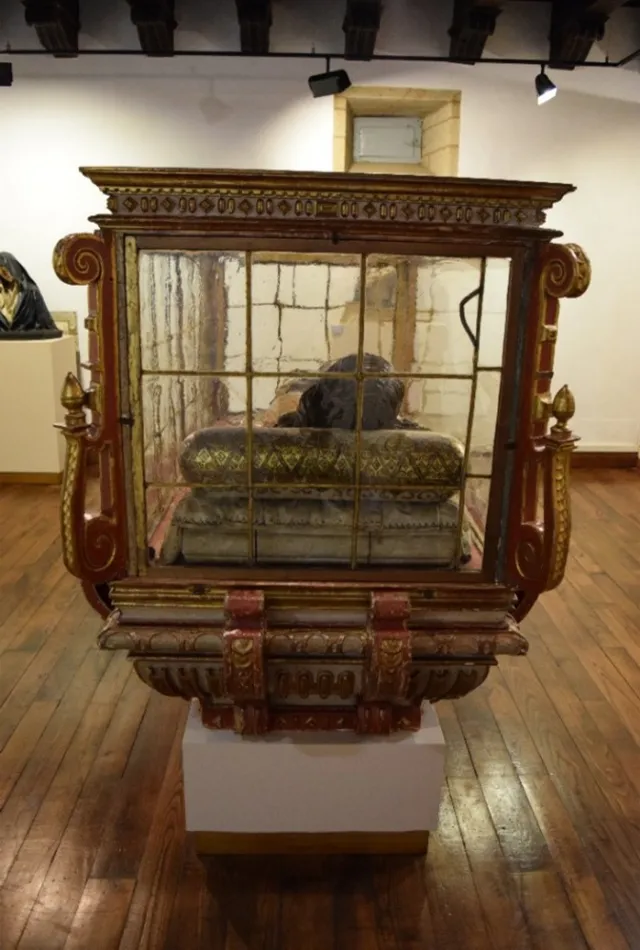
The work rests upon a pillow and a mattress, also carved in polychrome wood, which achieve a remarkable tactile effect of softness. The ensemble is completed with a processional urn of wood and glass, in which the sculpture is currently kept.
This example is considered the one of the highest technical quality among the various “recumbent figures” executed by Gregorio Fernández throughout his artistic career. It was commissioned around 1610 by the Duke of Lerma for his daughter, Catalina de la Cerda y Sandoval (1580–1648), founder of the convent of the Poor Clares of Monforte de Lemos.
- Chamoso Lamas, M. y Casamar, M. (1980). Museo de Arte Sacro Clarisas de Monforte de Lemos. Madrid: Caja de Ahorros de Galicia.
- Sáez González, M. (2012). Del Reino de Nápoles a las Clarisas de Monforte de Lemos: escultura del siglo XVII en madera. Lugo: Diputación de Lugo.
- Valle Pérez, J. C., y Fernández Otero, J. C. (1993). Os Museos da Igrexa en Galicia. Ourense: Xunta de Galicia.