The Calvary of Saint Fiz of Cangas
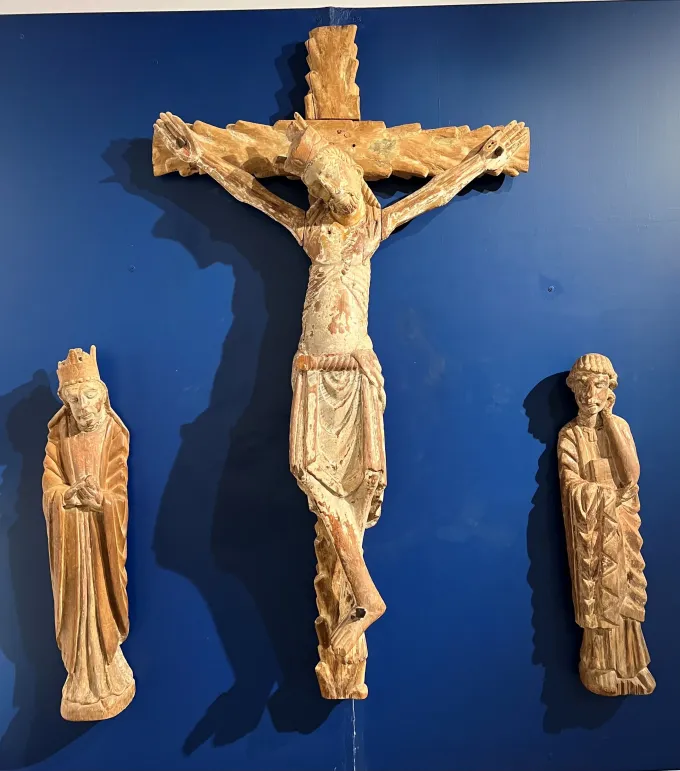
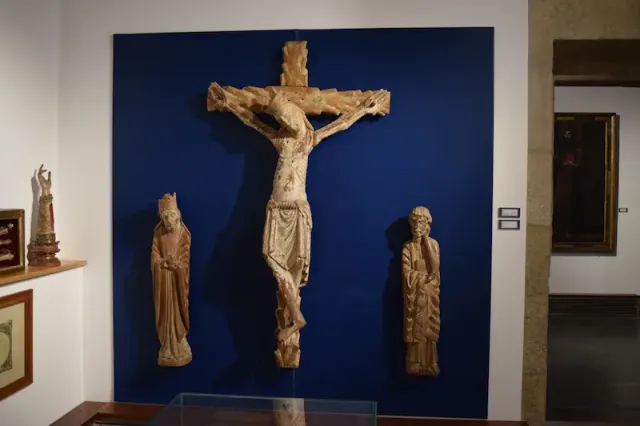
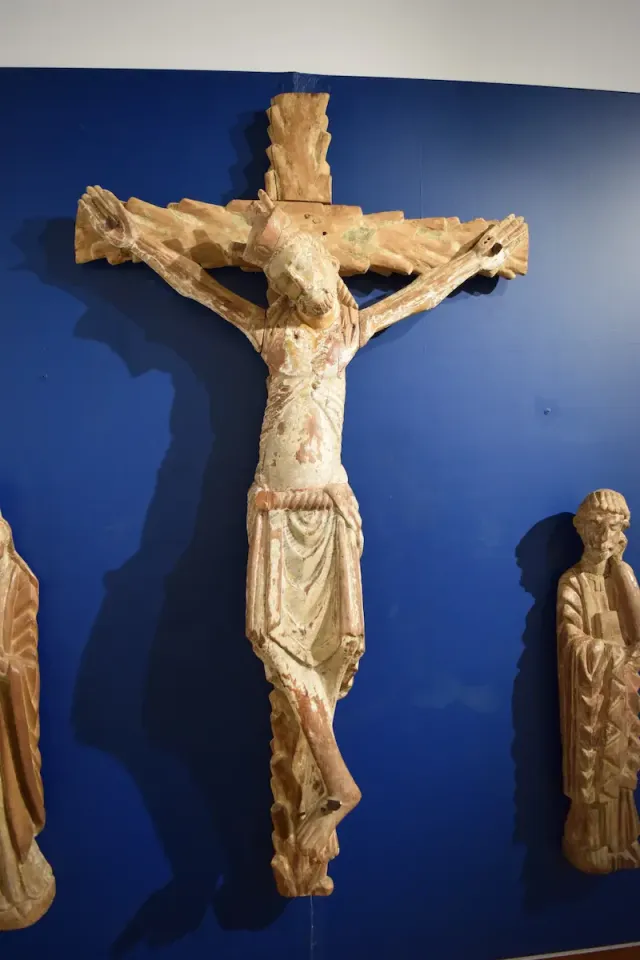
This ensemble is a gothic Calvary group executed in polychrome wood around the year 1300, originally from the parish of Saint Fiz of Cangas (Ferreira de Pantón). It is composed of three figures of a very elongated canon, presided over by a crucified Christ with three nails, of larger dimensions than the rest of the group.
The image of Christ stands out for its expressiveness, with the face tilted to the right, and for certain details such as the careful rendering of the garment folds and the elegant crossing of the legs. This are elements that refer to medieval models such as King David from the Portico of Platerías, attributed to the Master of the Francígena Door. Likewise, it preserves remains of original polychromy, especially visible on the loincloth and in areas of the face such as the carnations, the eyelids, and the beard.
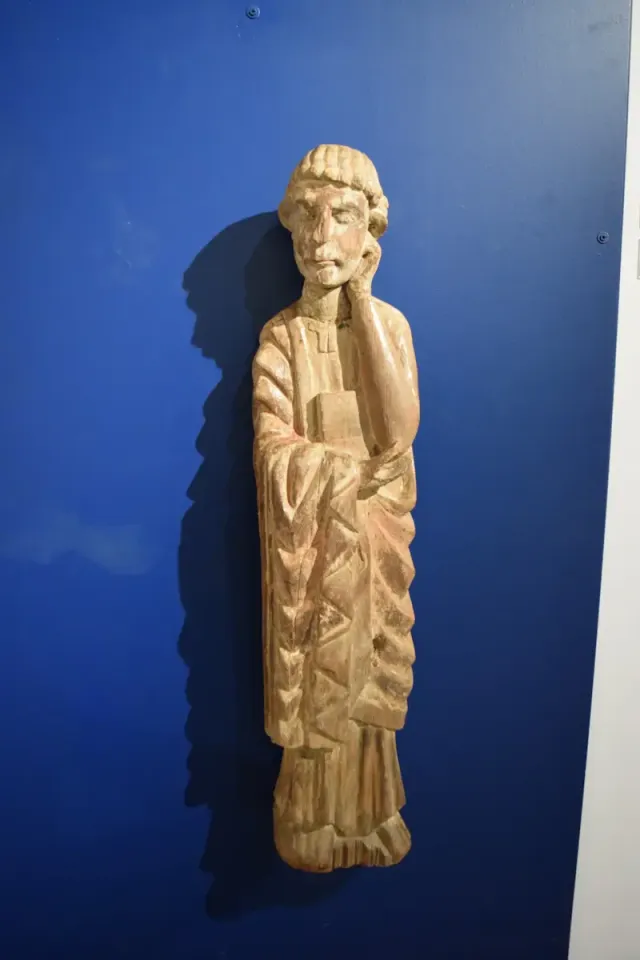
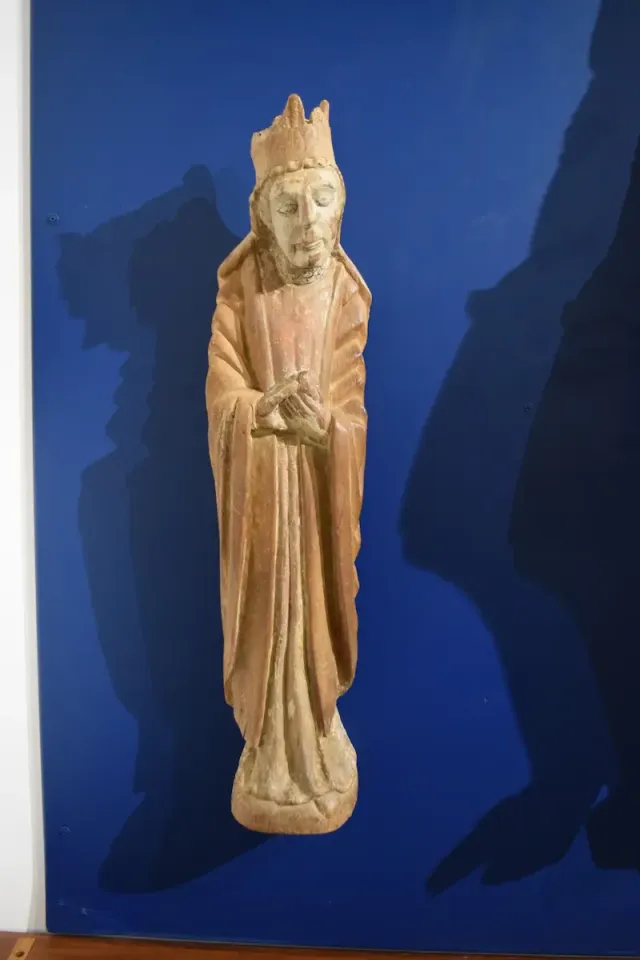
The figures of Mary and Saint John complete the group and they are smaller in size than the image of the Savior. Both transmit an introspective mood, capable of expressing serenity and restraint in the face of the terrible feeling of sorrow and guilt they are experiencing.
This ensemble constitutes an exceptional example of Gothic art in Galicia, both for its historical and artistic value and for the scarcity of medieval wooden works preserved in the region.
Finally, it should be noted that this work, currently deposited in the museum, preserves its original ritual function, as it forms part of the procession held during the pilgrimage in the parish of Saint Fiz of Cangas.
- Valiña Sampedro et al. (1975). Inventario artístico de Lugo y su provincia (t. II). Madrid: Servicio de Publicaciones del Ministerio de Educación y Ciencia.